In the volatile arena of Ugandan politics, where dissent is often met with force, a new front has erupted not on the streets of Kampala, but within the charged digital spaces of social media. This analysis delves into a revealing Facebook thread ignited by diaspora activist Patricia Ssewungu, which rapidly became a microcosm of the nation’s deepest conflicts. Through a gripping exchange between Ugandans abroad and those on the ground, we explore the fierce debate over the very meaning of political resistance. Examining the potent backlash against diaspora commentary, the weaponisation of satire, and the personal stakes for figures like MP Joseph Ssewungu, this piece uncovers the painful disconnect between exile rhetoric and local reality. We dissect the central, unanswered question of whether a country can be liberated from afar, all while unpacking the roles of Bobi Wine’s NUP, the rhetoric of war, and the pervasive distrust in institutions under President Yoweri Museveni’s long rule. This is the story of a nation arguing with itself, a compelling portrait of a fractured political landscape where the battle for Uganda’s future is being fought one comment, one meme, and one deeply personal plea at a time.
Keyboard Warriors & Ground Battles: The Ugandan Diaspora’s Digital Protest Dilemma
Introduction
In the charged digital atmosphere following Uganda’s 2026 general elections, a single Facebook post can ignite a firestorm that lays bare the nation’s deepest political fractures. Patricia Ssewungu, a Ugandan based in the UK, did just that. Her post, declaring “One day we shall liberate ourselves dear Ugandans … please fools don’t ask me to come on ground,” became a lightning rod. It sparked hundreds of comments, a microcosm of the raging debate about activism, exile, and political change in President Yoweri Museveni’s Uganda. This is more than a social media spat; it is a window into the soul of a nation grappling with where the battle for its future is truly fought.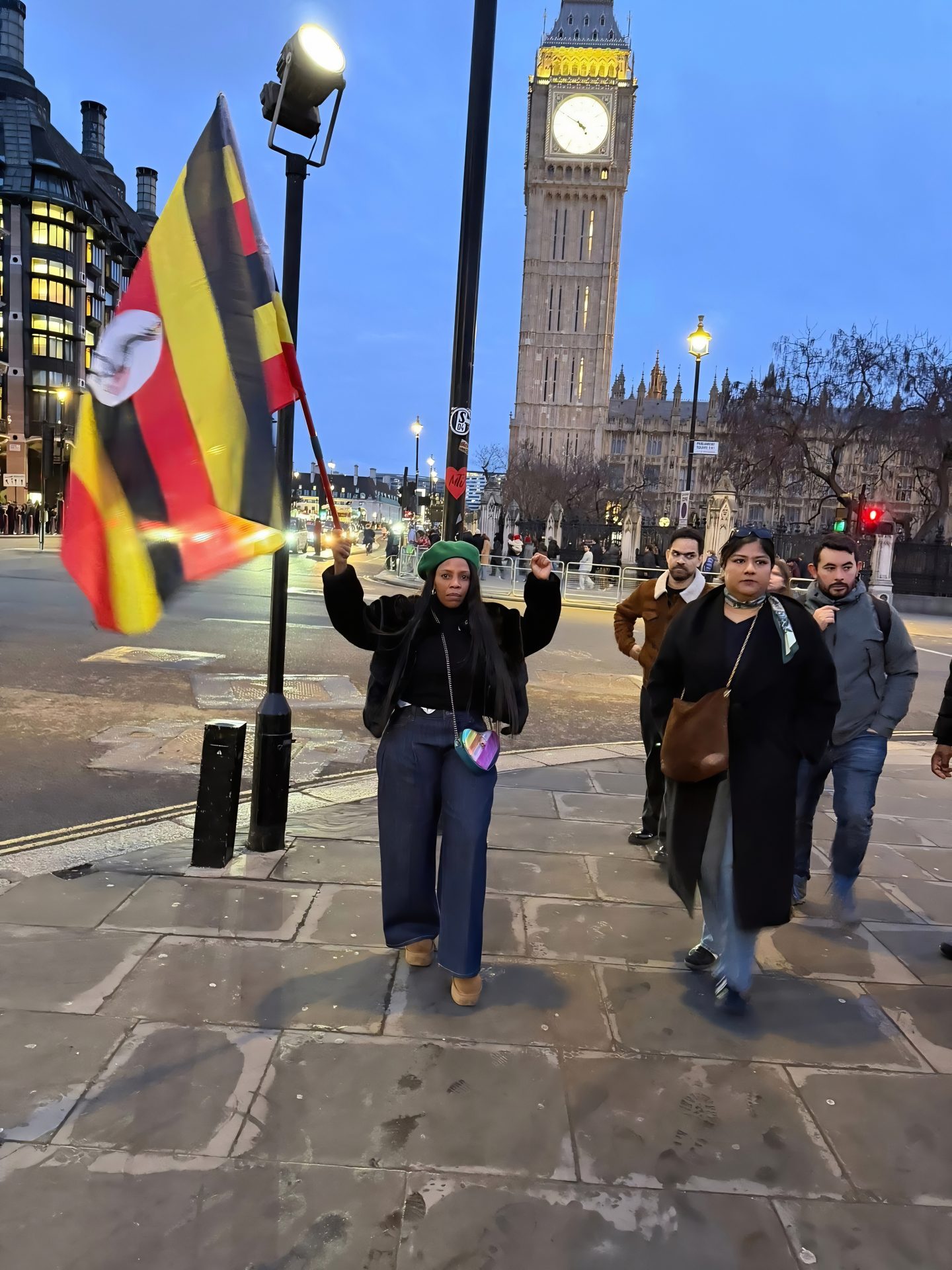
The Article: 20 Points from a Digital Battlefield
A Comprehensive Examination of The Provocation
The digital broadside fired from a distant shore, Patricia Ssewungu’s post, is a perfect snapshot of a modern Ugandan paradox. It’s the 21st-century version of shouting across a vast, treacherous swamp—the sound carries, but the shouter’s feet remain dry on foreign soil. Her declaration, a promise of future liberation met with an immediate dismissal of calls to ‘come on ground’, strikes the very nerve that twitches painfully in Uganda’s body politic.
This stance is not born in a vacuum. It is the product of a specific Ugandan reality, where for nearly four decades, the landscape of power has been meticulously engineered by one man, the dictator Yoweri Museveni, and his National Resistance Movement (NRM). The state apparatus—the police, the military, the so-called ‘crime preventers’—operates with a chilling familiarity. To be ‘on ground’ in Kampala, in Gulu, in Mbale, is to know the taste of tear gas, the arbitrary weight of a baton, the echoing dread of a midnight knock. It is to navigate an economy where ambition is too often taxed by patronage, and where the electoral field is as level as the Rwenzori mountains. The diaspora activist, from the relative safety of London, Toronto, or Stockholm, can condemn this with righteous fury, unfettered by these immediate, visceral fears. Their ‘ground’ is the WiFi-connected bubble of exile, a land of parliamentary protests and hashtag campaigns.
Yet, back home, this fury often lands not as a spark for revolution, but as a pebble thrown against a tank. The scepticism it meets is weary, ingrained, and deeply pragmatic. There’s an old saying: everyone’s quick to mend a broken cup, but few want to pay the potter. To those sweating in the Ugandan sun, bearing the daily brunt of the regime’s failures, the diaspora can sometimes resemble those enthusiastic cup-menders, holding forth on restoration while someone else foots the bill for the clay and the kiln. The bill here is paid in risk, in sacrifice, in a stubborn resilience that faces down the day-to-day grind of autocracy.
“Did you vote?? You left Uganda for the remaining to elect M7,” comes the retort. This isn’t merely a jibe about passport colour; it’s a fundamental question of shared sacrifice and legitimacy. The ballot, however flawed, remains a moment of profound consequence for those inside the borders. To have chosen the path of exit, however understandable, and then to lecture those who stayed and endured the charade can ring hollow. It speaks to a rupture in the very idea of collective struggle. The ‘ground’ is not just a location; it’s a state of being, of shared burden. The activist abroad shouts at the prison walls; the activist inside feels the cold of the cell.
This provocation and its backlash reveal a tragicomedy of modern resistance. The diaspora, armed with fibre-optic connections and the sanctity of foreign passports, operates in the theatre of international opinion. They file petitions, hold vigils outside embassies, and trend topics, performing for an audience of global institutions and sympathetic foreign publics. Meanwhile, on the actual Ugandan stage, the drama is far grittier—a relentless ensemble piece of joblessness, price hikes, silenced dissent, and the quiet, heroic defiance of simply getting by while refusing to bend the knee. The two performances are happening simultaneously, but often seem to be in different languages, playing to different crowds.
The humour in it is dark, almost farcical. One imagines the dictator and his inner circle, scrolling through these overseas diatribes from their fortified compounds, perhaps with a smirk. The protests in Trafalgar Square or Minnesota are a world away from the secure streets of Nakasero or Entebbe. It’s a safety that cuts both ways: it enables free speech for the exile, but it also drains that speech of its immediate peril, and thus, in the eyes of some, its potency.
Ultimately, this provocation is a symptom of a deeper, haunting dislocation. It is the cry of a people split in two by necessity and repression. One part is physically removed, screaming into the digital wind with the passion of unhealed wounds. The other is physically present, bruised and pragmatic, eyeing that screaming figure on the horizon and muttering, with a mix of longing and resentment, “If you think it’s so simple, why don’t you come and try it from here?” The liberation promised remains a mirage, shimmering in the space between the keyboard and the dirt road, between the safety of exile and the perilous, stubborn hope of home.
The Anatomy of the “Ground” Retort: A Moral Grenade Tossed Across the Waves
The retort is a masterpiece of vernacular political theory, compacted into a single, searing sentence. It doesn’t just question a strategy; it launches a direct assault on the very legitimacy of the diasporic critic. It transforms from a comment into a moral grenade, its pin pulled by the sheer, grinding frustration of life under the dictator’s endless tenure.
At its heart, the question “Did you vote??” is a deliberate reduction of ‘participation’ to its most perilous, tangible form. Within Uganda, voting is seldom a simple civic duty. It is a fraught performance, a ritual conducted under the watchful eyes of a state that has long conflated dissent with disloyalty. It means queuing beside uniforms with rifles, knowing the tally may bear little relation to the marks on the ballot, and that one’s choice, however secret, carries a whisper of consequence. To ask this of someone sipping tea in the British chill is to highlight a chasm of experience. It reframes the diaspora’s passionate online polling—their tweets and posts acting as votes in a court of global opinion—as a bloodless, cost-free pantomime compared to the bodily risk of the actual queue.
The second clause, “You left Uganda for the remaining to elect m7,” is where the blade twists. It invokes the ancient, unspoken law of shared fate. There is an adage that feels pertinent here: a fair-weather friend is the first to abandon ship, and the loudest to shout advice from the shore. This is precisely the image conjured. The act of leaving, whether for survival, education, or opportunity, is reinterpreted in the heat of the argument as a fundamental withdrawal from the collective burden. The ‘remaining’ are the ones who shoulder the weight of the consequence—the economic tailspin, the infrastructural decay, the blunt-force trauma of governance. The retort suggests that by physically removing oneself, one has forfeited a degree of moral standing to dictate the terms of a struggle borne by others. The authority to proclaim “we shall liberate ourselves” is considered compromised when the ‘we’ exists in the safe plural, while the ‘selves’ facing the daily music are an ocean away.
This riposte also cleverly exposes a raw nerve in the diaspora’s self-perception. Many who left did so under the very shadow of the dictator’s system—a system that stifled opportunity, that rewarded compliance, that made exile a rational choice for the ambitious or the threatened. Their condemnation of the regime is, in part, a condemnation of the forces that exiled them. Yet, from the vantage point of those who endured, that same exile can look like a tacit acceptance of the regime’s victory, a personal negotiation with the devil that left the collective behind. The firebrand broadcasting from a London studio is, in this harsh light, a living testament to the regime’s success in expelling troublesome elements.
There’s a grim, almost tragic humour to it. The exchange becomes a theatre of the absurd. On one stage, a person taps furiously on a glass screen, summoning the language of revolution—‘liberation’, ‘the people’, ‘must go’. On the other, a person sweeps the dust from their shopfront, sighs at another blackout, navigates a road more pothole than tarmac, and views that digital fury as a kind of background noise, a distant thunder that never brings rain. The retort is the shopkeeper’s weary shout back at the clouds: “If you’re so mighty, send the storm here.”
Ultimately, the power of the “ground” retort lies in its brutal simplicity. It bypasses complex debates about transnational activism and digital resistance. It anchors legitimacy in the mud, the sweat, and the relentless, wearing presence of life inside the cage. It is a reminder that while it is one thing to describe the lion’s ferocity from the safety of a tree, it is quite another to feel its breath on your neck in the tall grass. By questioning the diasporic voice’s right to narrate the hunt, it forces an uncomfortable, perhaps unanswerable, reckoning about where the true front line of a struggle really lies, and who has earned the right to draw its maps.
Of Kinship and Kingpins: When the Political is Familiarly Personal
The digital theatre of Patricia Ssewungu’s post gains its most compelling texture not from the broad brushstrokes of ideology, but from the intimate, messy details of blood and belonging. This is not an abstract commentator opining on statecraft; this is a sister watching the family business, and the business is politics—a trade as perilous as it is personal under the dictator’s long shadow.
Her brother, Joseph Ssewungu, the incumbent Member of Parliament for Kalungu, is not merely a politician; he is a family asset, a repository of hope, and a point of vulnerability. His contested victory, now subject to a court-ordered recount, transforms Patricia’s fiery online proclamations into something far more layered. They become the rallying cries of a shareholder in a deeply precarious enterprise. Her political commentary is inextricably braided with the family’s fate—a reminder that in Uganda, political capital and personal survival are often the same currency, printed by the regime and liable to be devalued without notice.
This familial lens exposes the raw mechanics of a system that has long understood the power of the personal. Opposition is not merely faced in the parliamentary chamber or on the campaign trail; it is squeezed in the quiet pressure on a business, the sudden bureaucratic impediment for a relative, the whispered threat that finds its way to a family compound. When Patricia speaks of liberation, she is therefore fighting for a concept with a face: her brother’s, her family’s. Her exile is doubly felt—not just from the nation, but from the direct, physical solidarity of the clan during a crisis. Every key she strikes in London echoes in the living rooms of Kalungu.
There’s an old saying that the stream rises from the spring, but when the flood comes, it drowns the very bank that birthed it. The Ssewungu family spring has been political life, a source of status and influence. Yet, the perpetual floodwaters of the dictator’s system—the legal manipulations, the electoral farces, the institutionalised favouritism—now threaten to inundate their own ground. The court-ordered recount is not a dry administrative procedure; it is a slow-motion drama where the tide of judicial compliance, often seen to flow in one direction only, threatens to wash away a family’s foothold.
This dynamic invites a peculiar, almost grotesque humour. The grand, revolutionary language of diaspora protest—“One day we shall liberate ourselves!”—clashes absurdly with the granular, nail-biting anxiety of a sibling: “Lord this is so boring now … Lord, take your wheel.” One moment she is a visionary speaking to the masses; the next, a frustrated relative awaiting a magistrate’s verdict, the epic scale collapsing into the agonisingly mundane. It lays bare a truth: for many, the grand struggle against dictatorship is a collage of a thousand personal battles for a child’s school fees, a business licence, or a brother’s parliamentary seat.
The spectacle is profoundly revealing. It shows how the dictator’s ecosystem operates by forcing every challenge into the personal, the petty, the exhausting. The might of the state is brought to bear not just through batons and bullets, but through the meticulous unravelling of individual lives and family fortunes. In this light, Patricia’s online stance becomes a form of remote defence, a attempt to wield the broadsword of international attention to protect a very specific, vulnerable garden plot back home.
Ultimately, this thread reminds us that in such a political climate, there are no true bystanders, only families at varying degrees of risk. The fray is not just in the streets or on the internet; it is at the dinner table, in the family WhatsApp group, in the hushed conversations about what comes next if the recount goes awry. The personal is not just political; it is the very battlefield upon which the political war is lost or won, one household, one sibling, one contested ballot box at a time.
The Brother’s Battle: In a subsequent post, Patricia shifts from revolutionary rhetoric to familial anxiety, lamenting the recount order for her brother.
The spectacle of Patricia’s subsequent post performs a dizzying pivot, a swift descent from the mountaintop of revolutionary prophecy into the cluttered, anxious living room of family concern. The grand, echoing cry of “liberation” gives way, mid-scroll, to the pinched and weary sigh over a “recount.” It is a shift that lays bare a fundamental Ugandan truth: under the dictator’s architecture, politics is never a purely ideological pursuit; it is a domestic drama, where the fate of the nation is negotiated in the same breath as the fate of a sibling, and survival is a calculation made across both the public square and the private compound.
This duality is the essential dialectic of opposition life. One cannot neatly separate the battle for a principle from the battle for a brother’s seat, for the seat itself is both a platform for the principle and a bulwark for the family. The recount ordered for Joseph Ssewungu is not a dry judicial technicality; it is a suspenseful chapter in a domestic saga. Will the family retain its foothold in the precarious architecture of the state? Will the patronage, the status, the meagre shield that a parliamentary position offers against the whims of the system, be whisked away by a magistrate’s signature? Patricia’s lament makes it clear: the political is not just personal; it is patrimonial. The fight against the dictator’s machine is simultaneously a fight to keep a specific roof over specific heads, a fight for medical bills, school fees, and communal standing that are inextricably tied to political fortune.
There is an adage that fits this tightrope walk: He who builds his house in the road will be perpetually dusted by the passing crowd. The Ssewungu family home, in a metaphorical sense, has been constructed in the very thoroughfare of Ugandan politics. The dust kicked up by the dictator’s passing motorcade—the legal machinations, the electoral theatre, the capricious application of rule—constantly settles upon their doorstep. Their livelihood, their security, is perpetually at the mercy of the traffic they seek to divert. Patricia’s dual voice captures this perfectly: she is both the revolutionary shouting to halt the traffic and the homemaker frantically sweeping the veranda.
The tragicomedy here is rich. It reduces the high-stakes clash of political visions to the agonising wait for a court clerk’s phone call. The bold iconoclast morphs into the worried sister, her timeline a jarring montage of fiery manifestos and muttered prayers for familial deliverance. This is the grinding reality the dictator’s system has engineered: it exhausts its opponents not only through confrontation but through enmeshment. It forces them to invest in a game they know is rigged, to seek space within a house they wish to demolish, because within that house lie the bedrooms where their children sleep.
Thus, the brother’s battle is the perfect microcosm. It illustrates how resistance is domesticated, how the hunger for a different future is forced to share a plate with the immediate need for tomorrow’s meal. Patricia’s swift shift in tone is not a contradiction; it is the only rational response to a world where the political siege is laid at the garden gate, and the defence of one’s kin becomes the most immediate, and most poignant, act of defiance.
The Portrait and the Passport: Unpicking the “Asylum Seeker” Barb
The accusation lands with the sharp, dismissive finality of a stamp in a passport: asylum seeker. In the digital skirmishes following Patricia Ssewungu’s post, this label, wielded by commenters like Kubangungi Stephen, is more than a slur; it is a sophisticated political solvent, designed to dissolve the moral authority of the diaspora critic into a murky puddle of perceived self-interest. It reduces the symphony of exile—a composition of fear, principle, and shattered dreams—to a single, monotonous note: the calculated preservation of a foreign visa.
This narrative is a potent counter-critique because it masterfully reframes motivation. It transplants the struggle from the lofty soil of patriotism and collective yearning into the narrow, bureaucratic flowerpot of individual immigration status. The protester shouting into a megaphone outside the Ugandan High Commission in London is no longer a brave voice for the oppressed; they become, in this telling, a performer in a necessary pantomime, gathering evidence of ‘anti-regime activity’ to present at their next Home Office interview. Their activism is recast as a transaction, a currency of outrage spent to purchase continued sanctuary. The implication is damning: your cause is not our liberation, but your leave to remain.
 There is an adage that whispers through this cynical framing: Every exile carries a portrait of their homeland, but the frame is always cut elsewhere. The portrait Patricia holds is of a Uganda free from the dictator’s grip, painted with the bold colours of memory and hope. Yet, the ‘frame’—the legal status, the social context, the very safety from which she speaks—is undeniably shaped by British scissors. The critic seizes on this frame, pretending it is the entire picture, shouting that the portrait itself is a forgery, a prop for the framer’s benefit.
The brutal cleverness of this attack lies in its exploitation of a painful ambiguity. The journey to asylum is often born directly from the regime’s cruelty—from political threat, from shattered opportunity, from a climate of fear cultivated by Museveni’s security apparatus. To then have that very survival mechanism twisted and used as a cudgel to question one’s genuine commitment is a masterstroke of psychological warfare. It injects a toxin of doubt and guilt into the diaspora’s veins. It forces them to defend not just their politics, but their personal trauma and their most rational choices for safety.
A grim, ironic humour festers here. The commentator, likely sitting in relative safety themselves within Uganda, perhaps enjoying a beer in a Kampala garden, points a finger at the exile shivering on a Sheffield pavement and declares, “Ah, but you are the one acting! Your suffering is a show!” It is a breathtaking inversion, where the reality of persecution becomes a script, and the quest for basic security becomes a mark of inauthenticity. The dictator’s success in making the homeland unlivable for some is thus transformed, through this twisted logic, into the very reason to dismiss their critique of him.
This narrative serves a crucial function for the regime’s sympathisers: it compartmentalises dissent. It builds a neat box labelled ‘Self-Interest’ in which to place all inconvenient criticism from abroad, allowing it to be dismissed without engaging its substance. Why listen to the details of electoral theft or state violence when you can simply nod and say, “They’re just protecting their visa”? It is a tool of intellectual disarmament, a way to silence the echo of one’s own conscience by pretending the speaker is merely singing for their supper.
Ultimately, the “asylum seeker” jibe exposes the raw nerve of dislocation. It highlights the exile’s eternal purgatory: to be forever suspected by those they left behind, and forever marked as ‘other’ where they have arrived. Their love for Uganda is forever shadowed by the paperwork that proves they fled it. In this narrative, the dictator wins a subtle victory, for he not only casts out his critics, but through voices like those on Facebook, he ensures that even their shouted warnings back towards home are interpreted not as cries of alarm, but as the rehearsed lines of a perpetual applicant, forever performing their distress for a foreign audience.
The Visceral Ledger: Poverty as Propaganda and Insult
The digital debate, so often a swirl of ideology and acronyms, can instantly revert to something primal and merciless. Patricia Ssewungu’s retort—“with all the poverty written on your face”—is a moment of brutal alchemy, transforming political disagreement into a stark, personal audit of perceived economic failure. This is not merely an insult; it is the weaponisation of the most visible, aching symptom of the dictator’s reign, turned inward upon a fellow citizen. It reveals a political discourse where the bitter fruit of national mismanagement is not just borne, but bitterly hurled.
This class-based attack functions as a visceral ledger, a crude balance sheet of suffering. In a nation where Museveni’s long rule is synonymous for many with the entrenchment of grotesque inequality—where glittering convoys sweep past lines for paraffin, and grandiose state projects look down upon sprawling slums—one’s perceived economic status becomes a political cipher. To have ‘poverty written on your face’ is, in this corrosive logic, to wear the evidence of one’s own poor judgement or moral failing; it is to be a walking advertisement for the benefits of compliance, or a testament to the hopelessness of dissent. The insult attempts to invalidate the supporter’s politics by framing them as the pathetic product of the very system they defend, a fool loyal to the architect of his ruin.
There is an adage that whispers of this cruel calculus: the bitterest tears are shed for debts unpaid. The poverty inscribed on that face, Patricia implies, is the unpaid debt of the dictator’s broken promises, the tear-strewn balance owed by a state that extracts taxes and loyalty but deposits only desperation. By pointing to it, she seeks to shame not just the individual, but the entire transactional premise of the regime: Look what you settled for. Look at the meagre wage of your silence.
The grim humour here is as dark as kampala clay. It resides in the awful symmetry: a critic living abroad, whose relative material security is itself a product of her escape from the economic paralysis at home, using the imagery of that same paralysis to bludgeon a compatriot who remained. It is a macabre pantomime where both actors use the same prop—the spectre of destitution—one as a warning from afar, the other as the daily reality. The supporter, in turn, likely sees not a compassionate advocate but a scold who bought her way out of the very condition she now uses as a slur.
This exchange lays bare how socio-economic division is not just a condition of Ugandan politics but a primary dialect. The state, under the dictator, has perfected a politics of patronage that explicitly links survival to allegiance, making every empty stomach a potential political argument. In turning this weapon upon each other, citizens perform a tragic replication of the state’s own divisive tactics. The struggle ceases to be solely about liberating the nation from an autocrat, and descends into a spiteful, internal squabble over who bears the true brand of his misrule, and who is therefore more compromised, more pitiable, or more guilty.
Ultimately, the ‘poverty insult’ is a confession of shared trauma turned outward as aggression. It is the sound of a people, collectively scarred by a system that monetises dignity, using the language of those scars to wound one another. In doing so, they risk mirroring the very cruelty they oppose, fighting over the dimensions of the cage while the architect of it watches, perhaps amused, from a distance. The face upon which poverty is written becomes not just a personal fate, but the contested billboard for a nation’s unending political war.
The Digital Dissident’s Dilemma: Hashtags as Hammers
In the shadow of the dictator’s monolithic state, where the physical space for assembly is often shrunk by the looming presence of riot shields and the cold logic of preventative arrest, the glowing screen emerges as a fraught but fertile plaza. The defence mounted by voices like Boss Anguyo—”Every protest adds up, be it on social media… what matters is your voice”—is not a naive celebration of slacktivism. It is a strategic affirmation of the online sphere as a legitimate, necessary, and uniquely potent arena of resistance in a context where the traditional town square is perpetually on lockdown.
This validation recognises a fundamental shift. When the body is policed, the avatar must speak. Social media platforms become the broadcast towers that the state cannot fully dismantle without revealing the brittle paranoia beneath its strength. Here, evidence of brutality is uploaded in real-time; a narrative counter to the regime’s tired fables is woven from a thousand threads of lived experience. A hashtag becomes a banner, a viral video a testament, and a trending topic a digital flash mob that momentarily unsettles the carefully curated calm. In a nation where Museveni’s machinery controls much of the traditional media, this cacophonous, citizen-driven feed represents a fragile but vital seizure of the means of narration.
There is an adage that captures this dynamic: A whisper in the ear of a giant may go unheard, but a million whispers become a wind that can topple a tower. The collective, persistent murmur of online dissent aims to create precisely that gale—a force of aggregated testimony and international attention that the regime must, in some small way, reckon with. Each post, each share, each defiant meme is a whisper added to the chorus, contesting the dictator’s monopoly on truth.
Yet, the defence also hints at a profound tragedy. The very need to champion the digital protest so vigorously underscores the suffocation of the physical one. It is the logic of the besieged, making weapons from whatever scraps are at hand. The online space is legitimised not because it is ideal, but because it is often all that remains. This creates a peculiar dissonance: a vibrant, shouting digital nation existing in parallel to a weary, watchful physical one. The protest that “adds up” online accumulates in a ledger that is critically important for morale and awareness, but whose conversion rate into tangible change on the ground—in Kalungu, in Kisekka Market, in Parliament—remains the agonising, unanswered question.
The grim humour lies in the scale. The regime, with its tanks and its anti-riot water cannons, finds itself contending with an opponent armed with smartphones and data bundles. It is a farcical, David-and-Goliath image, yet one where Goliath has learned to intermittently switch off the mobile network. This dance—of posts published, networks slowed, and VPNs activated—is the choreography of modern repression and resistance.
Ultimately, Boss Anguyo’s defence is both a rallying cry and a symptom of a constrained political reality. It champions the indispensable role of the digital voice in keeping the flame of collective dissent alive, in weaving a tapestry of shared grievance that the state cannot fully tear. But it also, tacitly, acknowledges the great unresolved rift: the space between the roar in the cloud and the silent, stubborn reality on the earth. The protest adds up, yes, but the final sum—the moment the digital wind finally meets the unyielding wall—is a calculation forever deferred, a revolution forever buffering, yet persistently, defiantly, loading.
The Manufactured Scapegoat: When the Ballot Box is Loaded with Ghosts and Guests
The allegation that “indigenous Ugandans voted [but] refugees stole their victory,” as voiced by Glosh Brigton, is more than a complaint about electoral irregularities. It is the dark, predictable bloom from a seed planted and cultivated by the dictator’s regime over decades: the deliberate, strategic manipulation of demography and citizenship for political perpetuity. This claim taps into the deepest well of opposition frustration, where the act of voting feels less like a civic duty and more like a participant in a rigged carnival game, where the prizes were never truly on offer.
This narrative of the stolen victory posits a theatre of democracy where the script is fixed, and the extras are bussed in. It speaks to a pervasive belief that the regime, under Museveni, does not simply win elections but constructs them, engineering a sympathetic electorate through the instrumentalisation of displacement and statelessness. The “refugee” in this context is transformed in the popular opposition imagination from a vulnerable human being into a spectral political actor—a convenient, disenfranchised body to be marshalled, a number to be tallied, a ghost vote to haunt the opposition’s aspirations. It is the ultimate alchemy of power: turning human misery into political capital.
There is an adage that speaks to this perversion of tools: A clever craftsman never blames his tools, but he may well hide the ones that suit his rival. The dictator’s regime, having mastered the craft of political survival, is accused of precisely this. It hides the true will of the people while brandishing alternative, more compliant electoral instruments—whether through the mysterious enrichment of voter registers in certain areas, the opaque distribution of national IDs, or the strategic settlement and registration of populations. The cry that “refugees stole the victory” is the anguished shout of those who see their chosen tool—their vote—rendered useless by a crafty operator using a hidden set.
The bitter irony here is tragic. It pits one oppressed group against another. Those making the allegation are themselves victims of a system that hollows out their political agency. Yet, in their search for a tangible villain, their anger is often directed not at the architect of the system in State House, but at the most vulnerable pawns on his board—people fleeing war or persecution, themselves stripped of home and agency, now accused of being the vehicle for a new occupation. This is the dictator’s classic diversion: to fracture the solidarity of the dispossessed, to ensure the hungry are too busy squabbling over crumbs to notice who owns the bakery.
Furthermore, this allegation exposes the rotten core of a state that treats citizenship not as a right but as a reward for loyalty, and the electorate not as a sovereign body but as a resource to be managed. When the boundaries of the political community are mutable, when who is allowed to vote can be strategically adjusted, then the very idea of a popular mandate becomes a sick joke. The opposition’s claim is, therefore, a scream into this void—an attempt to assert that there exists a genuine “us” whose voice has been mechanically drowned out by a fabricated “them.”
Ultimately, the pervasive theme of the stolen victory through manipulated demographics is a testament to a profound, institutionalised mistrust. It is the folklore of a people who have witnessed the machinery of state not as a servant of their will, but as an independent actor with its own agenda of eternal renewal. Every election under the dictator thus becomes a Gothic horror story, where the outcome is whispered to have been decided not on polling day, but in the shadows where populations are counted, categorised, and weaponised. The ballot box is not a sacred chest but a magician’s hat, from which the regime endlessly pulls the same rabbit, while convincing sections of the audience that the trick was performed by the terrified refugee sitting quietly in the back row.
The Pot, the Kettle, and the Never-Ending Meal: On the Contagion of Incumbency
The charge levelled by critics like James Kigahood B—”You want Museveni to retire but not [MP] Ssewungu”—lands with the crisp, satisfying snap of a perceived hypocrisy exposed. It is a political tu quoque, a mirror held up to the opposition, demanding they examine the reflection of power and tenure staring back at them. This accusation does more than point out inconsistency; it attempts to blur the very line between critic and incumbent, suggesting that the hunger for office is a universal contagion, differing only in scale, not in kind.
This critique of “overstay” focuses on a painful contradiction in the anatomy of resistance. It highlights the tension between fighting a system and operating within its confines. The dictator, Yoweri Museveni, embodies the ultimate pathology of perpetual incumbency, a man who has fused his being with the state over nearly four decades. To oppose him is, logically, to oppose the very principle of political eternity he represents. Yet, when opposition MPs—like Joseph Ssewungu—dig into their own parliamentary seats over multiple terms, they risk appearing to validate the same culture of entrenchment they purport to despise. They become, in the eyes of critics, miniature reflections of the same problem, like small, stubborn tributaries feeding the very lake they claim is flooding the village.
There is an adage that fits this dilemma: the pot calling the kettle black. The accusation masterfully invokes this classic image of recursive blame. The regime’s supporters, and even weary citizens, wield it to drain moral authority from the opposition’s cause. It frames the struggle not as a clean battle between change and stagnation, but as a squabble between different claimants to the same throne of permanence. The revolutionary cry for “new blood” at the summit rings hollow if it isn’t matched by a churn of new voices within the opposition’s own ranks.
However, this simplification ignores the brutal calculus of survival within a captured state. For an opposition MP, longevity is not merely about personal ambition; it is often a hard-won repository of institutional knowledge, a fragile network of protection, and a platform that would immediately vanish into the regime’s maw if vacated. Stepping aside can feel less like noble self-sacrifice and more like unilateral disarmament in a perpetual war. The system, designed by the dictator, makes individual political survival synonymous with continued relevance, thereby trapping critics in the very cycle of incumbency they seek to break.
Thus, the “overstay hypocrisy” reveals a tragic, almost circular trap. To build a machine capable of challenging a behemoth, one must adopt some of its methods, including consolidation of position. Yet, in doing so, one begins to resemble, in form if not in magnitude, the beast one seeks to slay. The opposition is damned if they do—accused of becoming what they hate—and damned if they don’t, rendered eternally inexperienced and powerless.
Ultimately, this line of critique is most devastating because it targets the opposition’s soul. It forces a reckoning with whether the goal is merely to replace the faces at the feast, or to fundamentally dismantle the table itself. It asks if the fight against the dictator’s endless reign is underpinned by a genuinely different philosophy of power—one of rotation, humility, and service—or if it is merely a quarrel over whose turn it is to sit in the ageing chair. Until this is resolved, the accusation will linger: a potent reminder that in the shadow of a man who confused a nation for a personal estate, even the deeds of his opponents can be measured by the same weary yardstick of time.
The Spectre and the Stage: The Unfinished Revolution of the “Ghetto President”
The figure of Bobi Wine—musician, politician, and symbol—casts a shadow so long it stretches from the dusty alleys of Kamwokya to the comment sections of exiles in London. His presence, and that of his National Unity Platform (NUP), is the electrified wire running through the entire discourse, a source of both blinding hope and shocking disillusionment. The comments that veer wildly from celebrating the “protest vote” to lamenting its abject failure are not mere fickleness; they are the audible cracks in a grand, unfinished narrative, revealing a leader who is simultaneously the most potent focal point for dissent and a Rorschach test for the nation’s desperation.
Bobi Wine emerged not merely as a candidate, but as a living allegory—the “ghetto president” who gave a microphone to the voiceless and a political language to a generation suffocated by the dictator’s forty-year grammar of fear and patronage. His rise symbolised the “protest vote” incarnate: a raw, cultural and political rejection of the Museveni ancien régime. Every vote for him was not just a mark on a ballot but a brick thrown, figuratively, at the imposing edifice of the state. This was a vote loaded with catharsis, a collective performance of defiance where the act itself, amidst the intimidating military deployment and electoral farce, felt like a fragment of victory snatched from the jaws of foregone conclusion.
Yet, herein lies the seed of the polarising narrative. The same symbolic potency that mobilises also sets the stage for perceived betrayal. An adage whispers of this danger: A prophet is never welcomed in his own hometown, but he is always blamed when the drought comes. Bobi Wine was welcomed as a prophet of change, but when the downpour of liberation did not follow the electoral storm clouds, the blame began to circulate. The lamentations over the “protest vote’s” failure stem from a fundamental, perhaps naïve, misunderstanding of power. Supporters hoped the sheer, righteous weight of their collective voice would topple the tower. When it did not—when the dictator simply reset the chessboard after checkmate was declared—the leader of the protest becomes a convenient receptacle for the resulting grief and fury.
His role is polarising precisely because he exists in a liminal space between two worlds. To the diaspora and the youthful urban poor, he remains the untarnished icon of resistance, his very survival a miracle and his continued voice a weapon. To others, particularly those bearing the daily brunt of the regime’s economic stranglehold, he has begun to resemble just another politician—one whose fiery sermons have not put food on the plate, whose parliamentary wing is ensnared in the same messy, compromised theatre of politics they vowed to destroy. The “protest vote” is thus seen by some as a spent force, a firework that lit up the sky beautifully but left only smoke and deeper darkness.
The regime, of course, expertly fuels this polarisation. It manoeuvres to reduce the NUP from a revolutionary movement to just another parliamentary opposition—containable, negotiable, and susceptible to the same wear and tear of political life. Every arrested MP, every protracted court case, every manufactured internal discord, is designed to transform the spectre of revolution into the banality of political management.
Therefore, the shadow of Bobi Wine is the shadow of Uganda’s own political crossroads. He is the mirror reflecting both the exhilarating possibility of a bottom-up political awakening and the crushing inertia of a system built to absorb and neuter all challenge. The celebrants and the lamenters are two sides of the same coin of profound discontent. One side still believes the coin can purchase freedom; the other believes it has been revealed as a counterfeit, leaving them bankrupt. His central, polarising role is guaranteed until this tension resolves—until the prophet either finally brings the rain, or the people stop waiting for him and decide to dig wells themselves.
The Geometry of Exhaustion: When the Circle of Hope is Drawn in Foreign Capitals
The plea that cuts through the digital noise—”World, you must stand up with us”—is more than a request; it is a moral and strategic calculus born from a profound and wearying geometry of power. It represents the moment where the circle of possible internal resolution seems to have collapsed inwards, leaving only the desperate drawing of a line outwards, towards a nebulous ‘international community’. This cry, as voiced by Joseph Tibyasa and countless others, is the audible sound of a political imagination pushed to its perimeter, seeking external levers for a lock that has defied all internal keys.
This call is underpinned by a stark diagnosis: that the dictator’s regime is no longer a conventional political opponent to be out-debated or out-voted, but a fortified, self-replicating system. It views the architecture of the state—the military, the judiciary, the electoral commission—not as neutral arbiters but as integrated components of Museveni’s perpetual motion machine. When every internal avenue is seen not just as blocked, but as part of the wall itself, the gaze inevitably turns to the horizon. The belief, however faint, is that the gravitational pull of global sanctions, diplomatic isolation, or targeted asset freezes might succeed where local protest and political opposition have been meticulously neutralised.
There is an adage that cloaks this desperate outreach in a shroud of tragic pragmatism: beggars cannot be choosers. This is the unspoken creed of the exhausted. Having been picked clean by a predatory state, they are left with nothing but their testimony to offer the world, hoping it will be currency enough to purchase intervention. It is a surrender of agency born not from cowardice, but from a systematic, decades-long campaign to confiscate the very tools of agency. The plea acknowledges a humiliating but perceived truth: that the local balance of power is so utterly distorted that only a weight from outside the system can tip the scales.
Yet, this strategy exists in a cruel paradox. The very act of internationalising the struggle can be wielded by the regime as proof of its narrative: that opposition is not home-grown dissent but a foreign-sponsored plot. The dictator has long mastered the art of performing sovereignty, framing any external criticism as an affront to national dignity, thereby rallying a defensive nationalism to his side. The call for the world to “stand up” thus plays into a ready-made script, where Museveni can posture as the bastion of Ugandan self-determination against neocolonial meddlers.
Furthermore, this dynamic fosters a haunting, passive vocabulary of salvation. It casts the Ugandan citizenry in the role of spectators in their own liberation drama, awaiting a deus ex machina in the form of a UN resolution or a Western embassy statement. It risks substituting the slow, hard, dangerous work of building resilient internal structures of resistance with the ephemeral hope of a cavalry that may never come, or that may arrive only with its own conditional agenda.
Ultimately, these calls map a topography of modern political despair. They chart the journey from belief in the ballot, to faith in the street, to a last, forlorn hope in the fax machines of distant foreign ministries. It is the sound of a people, pushed to the edge of their own political landscape, shouting across the border of sovereignty into an international arena often deafened by realpolitik and hypocrisy. The tragedy is doubled: first by the oppression that necessitates the cry, and second by the cold global arithmetic that so often translates “stand up with us” into little more than a politely worded statement of concern, drafted in a time zone far away from the midnight knocks and the sealed ballot boxes.
The Fortress of Fidelity: Performing Allegiance in the Shadow of the Mountain
Amidst the digital fray, a counter-chorus rises with disciplined vigour, not to critique but to consecrate. Voices like Oris Olowo Kenge’s do not merely disagree; they construct a formidable fortress of alternative reality, built from the twin bulwarks of veneration and vilification. Their robust defence of “our beloved president YKM” and their dismissal of dissenters as “foolish criminals” is not simple political preference. It is a performance of allegiance essential to the maintenance of the dictator’s ecosystem, a ritual that reinforces the official mythology while strategically poisoning the wells of opposition.
This defence operates on a sacred principle: the personalisation of the state. Museveni is not referred to as a president, a title implying temporary service, but as “beloved,” a term of emotional and almost familial fidelity. This language transforms political support into a matter of personal devotion, insulating the subject from factual critique. To question policy is to insult a beloved figure; to protest is an act of treachery against the national family. This emotional framing short-circuits rational debate, making the regime synonymous with the nation’s soul, and its critics enemies of both.
The concurrent mockery of diaspora voices as “foolish criminals” serves a crucial, dual purpose. First, it criminalises dissent, echoing the state’s habitual rhetoric that frames all opposition as inherently lawless. By labelling them “criminals,” the supporter performs a miniature act of judicial theatre, delivering a verdict that mirrors the state’s own kangaroo courts. Secondly, the “foolish” tag injects a potent dose of ridicule, weaponising laughter to drain the diaspora’s stance of gravity or dignity. It reduces complex grievances and trauma-driven exile to the ravings of a jester, a figure not to be feared or heard, but pitied and scorned.
There is an adage that fits this reflexive, defensive orthodoxy: A man convinced against his will is of the same opinion still. The pro-regime commentator is often not seeking dialogue but affirmation. Their words are less an argument and more an incantation, rehearsing the state’s talking points to strengthen the walls of their own conviction and signal loyalty to the watching authorities. This performance is especially vital in the public square of social media, where visibility is currency, and a robust defence of the throne might be noted, remembered, and possibly rewarded in the opaque economy of patronage that sustains the dictator’s rule.
The humour here is bleak, existing in the staggering gap between the descriptor “beloved” and the documented reality of governance—the corruption scandals, the security brutality, the institutionalised poverty. To the outsider, it reads as tragic farce, a performance of devotion to a king whose legacy is a landscape of potholes and debt. Yet, for the performer, it is a serious act of social and political navigation. In a system where loyalty is the primary currency, professing love for the strongman is a survival skill, a public declaration that one is inside the walls, not with the “foolish criminals” beating against the gates.
Ultimately, this push-back is the echo of the state’s own megaphone in the mouths of its subjects. It demonstrates the successful internalisation of a narrative where the dictator is the enduring father of the nation, and any challenge is an act of juvenile delinquency or foreign-sponsored madness. It turns political discourse into a morality play, where the roles of hero and villain are pre-cast, and the script, unchanged for decades, is recited with a conviction that brooks no ad-libbing. The tragedy is not that they believe it, but that the system has made the performance of such belief a necessary passport for peace, if not progress.
The Geology of Power: When Resistance Meets the Immovable Object
The statement lands not as a critique, but as a geologic fact. “Those riots will not remove museveni.” This is not merely a political prediction from Grace Namudu; it is the utterance of a deep, weary wisdom forged in the furnace of decades. It reflects a resignation so profound it has crystallised into a worldview—a belief that the dictator’s regime is less a political structure and more a permanent feature of the landscape, as immovable as the Rwenzoris and as enduring as the source of the Nile. This is the futility argument: the chilling conviction that all expenditure of energy against the mountain is, by definition, wasted.
This sentiment is the bitter harvest of a long season. It is the product of witnessing, time and again, the regime’s ruthless mastery of political physics. Every protest is met with disproportionate force. Every electoral challenge is outmanoeuvred by legalistic sleight of hand or blatant arithmetic sorcery. Every public grievance is absorbed, deflected, or crushed. The state security apparatus operates not as a reactive force, but as a pervasive, preventative presence. The result is a learned helplessness on a societal scale, a collective muscle memory that has internalised the lesson: to push is to be pushed back, harder. To shout is to be silenced, permanently. The regime’s greatest power is not just its ability to win, but its demonstrated, relentless capacity to make the very act of opposition seem structurally futile.
There is an adage that perfectly captures this enforced equilibrium: You cannot push against a mountain. The futility argument is the acceptance of this topographical reality. The mountain does not debate; it simply exists. It weathers storms and ignores shouts. The diaspora protester, from this vantage point, is a figure shaking their fist at a peak from a distant valley, their passion rendered picturesque but inconsequential. The local would-be agitator is considered someone about to bruise their hands on an immovable rock. The mountain’s very presence dictates the flow of all around it; to believe otherwise is, in this logic, a form of delusion.
This belief in immovability is the dictator’s most vital social infrastructure. It is the silent, invisible wall that contains dissent more effectively than any barbed wire. When a population becomes convinced of its own powerlessness, the regime’s work is half done. It allows oppression to operate with a lower dosage of overt violence, because the psychological barrier to action is already so high. Why risk everything for a gesture that history has shown to be futile? This calculus of despair is what maintains the quiet in the streets, the sullen order that the regime then points to as evidence of peace and popularity.
The tragic irony is that this resignation, while understandable, becomes a self-fulfilling prophecy. It confuses the current balance of force with an eternal law of nature. It mistakes a meticulously maintained authoritarian system for an inevitable state of being. The mountain, of course, is not a natural formation. It is a carefully constructed pyramid of patronage, fear, and international complicity. Its permanence is an illusion sustained by performance, but an illusion nonetheless. Yet, to those living in its shadow for a lifetime, the distinction between a natural mountain and an artificial one becomes academic. The shadow it casts is equally cold, the path over it equally impossible to see.
Thus, the futility argument is more than an opinion; it is the central nervous system of a captured polity. It is the sigh that stifles the shout before it is born. It represents the ultimate victory of a long-reigning dictator: not just to defeat his opponents, but to convince a great many that the fight itself was always, and will always be, a fool’s errand. The regime’s stability is secured not only by the weapons it displays, but by the hope it has successfully buried.
The Loaded Dice: When the Courtroom is Merely the Third Act of a Scripted Play
The fear articulated by Zubeda Hassan—“Now they have tempered with seals”—is not a paranoid fantasy, but a cold reading of a familiar script. It reflects a foundational conviction that the judiciary under the dictator’s long reign is not an independent branch of government, but a sophisticated annex of the state’s machinery for political management. The courtroom, in this view, is not a hall of justice but a theatre for a specific genre of performance: the legitimisation of pre-determined outcomes through a pantomime of procedure.
This deep-seated distrust stems from a lived history where legal process is so often observed to bend, not to the weight of evidence, but to the gravity of political expediency. The “seals” on a ballot box are not mere physical fastenings; they are symbolic promises of integrity. To believe they have been “tempered with” is to assert that the entire ensuing legal ritual—the recount, the submissions, the magistrate’s contemplative pause—is built upon a corrupted foundation. It is to see the judiciary not as a referee, but as a player wearing a referee’s uniform, tasked with providing a legally sanctioned epilogue to a drama whose ending was written in a different office entirely.
There is an adage that speaks to this perceived manipulation: The dice are always loaded in favour of the house. In the Ugandan context, the ‘house’ is the regime, and its casino is the state. Every significant legal challenge against its interests is considered a gamble where the odds are not merely unfavourable, but mechanically fixed. The judiciary, in this analogy, is the croupier—polite, proficient in the rules, but ultimately serving the house’s imperative to protect its capital. A recount ordered is not an opportunity for truth, but a calculated delay or a mechanism for an adjusted result that maintains the house’s winning streak while feinting toward fairness.
This transforms judicial proceedings into a source of profound psychological violence. It forces citizens into a state of corrosive cynicism, where hope is the most dangerous delusion. To engage with the process is to be complicit in one’s own manipulation, to lend one’s dignity to a show trial of democracy. The fear of “judicial manipulation” is thus a survival instinct, a refusal to be fooled again by the solemn robes and Latin phrases that cloak a political operation.
The tragedy is that this belief, however well-earned, ultimately reinforces the regime’s power. It breeds a disengagement that suits the dictator perfectly. When people believe the courts are merely arms of the state, they cease to view them as avenues for redress, thereby collapsing a crucial pillar of a functioning society and leaving raw power or silent resignation as the only remaining paths. The regime’s lawyers can then perform their scripts in near-empty theatres of public faith, their verdicts met not with outrage, but with a grim, knowing nod.
Thus, the remark about tampered seals is a micro-diagnosis of a macro-malaise. It is the voice of a populace that has learned to see the law not as a shield, but as a component of the weaponry arrayed against them. It reveals a world where the gavel’s sound is not the knock of justice, but the closing of another trapdoor, leaving citizens in a permanent state of suspension between the crime of the regime and the farce of its legal remedy.
The Entangled Vine: When the Political Tree Cannot Bear Separate Fruit
Patricia Ssewungu’s attempt at demarcation—her insistence that her brother’s parliamentary seat “doesn’t affect me”—is not simply a statement of personal independence. In the Ugandan context, it is a radical, almost heretical, declaration of autonomy that cuts against the deeply ingrained grain of political reality. The fierce contestation this provokes illuminates a fundamental tenet of life under the dictator’s ecosystem: that political families are organic, entangled units, where the fate of one member is irrevocably woven into the fortunes, and more acutely, the vulnerabilities, of all.
This expectation of a shared fate is not mere sentimental tradition; it is a strategic calculus born of a system engineered by Yoweri Museveni, where politics is less a public service and more a high-stakes enterprise of patronage and peril. A parliamentary seat is not an office; it is an asset, a source of influence, a platform, and—critically—a target. To believe that the possession or loss of such an asset does not ripple through the entire family network is to misunderstand the very nature of power and retribution in such a climate. The benefits—the enhanced social capital, the potential for facilitated services, the protection that status might afford—are passively enjoyed by the kin. Conversely, the liabilities—the political enmities incurred, the legal battles fought, the constant scrutiny—are also collectively borne. In this world, to be the sibling of an opposition MP is to reside in a house where the walls are both shelter and bullseye.
There is an adage that frames this inexorable connection: A family on the political stage shares not just the script, but the spotlight and the stray bullets. Patricia’s attempt to step out of the light is viewed as an act of narrative defiance. Her critics interpret her proclamation not as independence, but as a form of disloyalty or a naive delusion. The regime itself operates on this principle of collective pressure, understanding that the easiest way to control a politician is to threaten the wellbeing of their family. By claiming detachment, Patricia is challenging a manipulative tool of the state, but also a deeply held social belief in kinship solidarity.
The bitter irony of her position is inescapable. Her entire platform as a diaspora commentator is built upon her political identity, which is itself inextricably linked to her family’s prominence. The Ssewungu name is her credential, the source of her insider knowledge, and the hook for her audience. To then claim that the specific seat carrying that name does not affect her is to saw off the very branch she sits upon, while expecting the tree to remain upright. It is a performative contradiction that fascinates and infuriates in equal measure.
Ultimately, this clash between the personal declaration and the political expectation reveals the suffocating totality of the system. The dictator’s long reign has fostered an environment where no one, especially those bearing a politically charged surname, can neatly compartmentalise their existence. The political is personal because the state makes it so, deliberately blurring the lines to extend its reach into living rooms and family WhatsApp groups. Patricia’s contested retort, therefore, is more than a family tiff; it is a micro-rebellion against a forced conscription, a lone voice trying to declare neutrality from a war that has already conscripted her name. Whether such a neutrality can exist is the haunting question her defiance leaves hanging in the digital air.
The Digital Drumbeat: A Generation Tapping Out a New Rhythm on Broken Systems
Beneath the specific sparring over votes and visas in Patricia Ssewungu’s thread thrums a deeper, generational frequency—a pulse of raw, wire-fed frustration. While the faces in the debate span ages, the prevailing tone carries the distinct imprint of a younger, digitally native cohort for whom the traditional political theatre feels not just corrupt, but obsolete. Their impatience is less with a single election and more with the entire script, a profound weariness with the ageing narratives and rusted processes that have governed—and failed—their entire lives.
This generation has come of age in the long shadow of the dictator, Yoweri Museveni. For them, his rule is not a historical chapter they read about, but the stagnant atmospheric condition of their existence. They navigate a world of breathtaking global connectivity alongside paralysing local stagnation. They can stream high-definition visions of elsewhere on smartphones powered by jerry-rigged electricity, all while being told that meaningful political change must filter through the same sclerotic, compromised channels that have preserved the status quo for decades. The disconnect is visceral. Their tools are instantaneous; their governance is glacial. Their networks are global and horizontal; their politics remain stubbornly vertical, hierarchical, and locked behind gates guarded by old men.
There is an adage that captures this clash of temporalities: A new broom sweeps clean, but it cannot sweep while the old one is still clinging to the floor. The younger generation embodies that new broom, bristling with intent and digital dexterity. Yet, they find the political floor perpetually occupied by the battered, entrenched bristles of the old order, who view the broom itself as a frivolous intrusion, not a tool for renewal. Traditional processes—party structures that demand blind loyalty, opposition strategies that recycle familiar failures, the ritual of queuing to cast a ballot in a foregone conclusion—feel less like participation and more like a coerced performance in a play whose ending never changes.
Their expression, therefore, migrates to the platforms they own and understand. Social media is not just a megaphone; it is their public square, their organising tool, their archive of evidence, and their satire magazine. The “tone” is one of sardonic, hyper-aware impatience. They communicate in memes that distill complex oppression into a shareable joke, in videos that bypass propagandistic state media, and in relentless, real-time commentary that treats the regime’s solemn pronouncements as fodder for collective deconstruction. Their activism is native to this environment: faster, more adaptive, and less reverent of the dusty etiquette of political opposition.
This digital fluency, however, exists in a tragic tension with the analogue grip of power. They can #Cancel a cultural figure in a day, but they cannot #Cancel a dictatorship built over forty years. They can mobilise a viral campaign, but they cannot unseat a system fortified by guns and patronage. The frustration is amplified by this very competence—they are masters of a domain where change appears fluid and possible, yet remain subjects in a physical domain where change is resisted with primordial force.
Ultimately, the thread’s tone is the sound of a generation knocking insistently, not just on the doors of the State House, but on the very architecture of the political house itself. They are less interested in renovating the old rooms than in questioning the blueprint. Their impatience is a form of intelligence—a recognition that the old narratives of slow, patient change have yielded only a cemented present. Whether this digital drumbeat remains a background score to continued stagnation or becomes the rhythm of a decisive rupture is the unanswered question that hangs over every glib comment and every passionate plea in the chaotic, captivating forum of their making.
The Grammar of Siege: When Words Become Weapons of Existential War
The lexicon that fires through the thread like tracer rounds—”liberate,” “comrades,” “must go,” “bleeding”—is more than mere political slang. It constitutes a complete linguistic arsenal, a grammar of siege that reframes the political realm not as a forum for dialogue, but as a theatre of existential war. This is not the language of debate, of compromise, or of incremental reform. It is the vocabulary of absolutes, of clear-cut fronts and final solutions, a diction that systematically erodes the very possibility of a middle ground, transforming nuanced civic engagement into a stark drama of survival and annihilation.
This terminology is not chosen carelessly. It is the inevitable linguistic adaptation to a political reality curated by the dictator, Yoweri Museveni, where the state’s response to dissent has long employed the actual tools and tactics of warfare: barracks language, militarised policing, and the strategic deployment of fear. When the state acts like a besieging army against its own citizens, the citizens begin to describe their resistance in the language of a liberation force. “Comrades” suggests a bonded unit in the trenches, not fellow voters with differing opinions. To “liberate” implies an occupied homeland, not a nation with a disputed administration. The country “bleeding” is not a metaphor for policy failure, but a diagnosis of a mortal wound inflicted by the regime. This language does not describe a political disagreement; it narrates a conflict for the nation’s very soul.
There is an adage that speaks to this dangerous reduction: To a man with a hammer, everything looks like a nail. The regime has, for decades, wielded the hammer of militarised control. In response, a significant strand of opposition has instinctively reached for a hammer of its own—a rhetorical one. Every issue becomes a nail to be struck, every opponent an enemy to be flattened. The subtlety of governance, the complexity of political economy, the textured fabric of a diverse society—all are compressed into the simplistic, brutal binary of oppression versus freedom, dictator versus people. This leaves no conceptual space for negotiation, for the acknowledgement of mixed outcomes, or for the slow, unglamorous work of building alternative institutions.
The effect is a chilling polarisation that benefits the entrenched power. By engaging in this linguistic war, the opposition often mirrors the regime’s own monolithic worldview, inadvertently validating its premise that politics is a winner-takes-all battle rather than a collective stewardship. It creates an environment where scepticism of a tactic is seen as treason to the cause, where questioning a slogan is conflated with supporting the dictator. The room for internal critique, for strategic evolution, or for building bridges with the ambivalent middle, evaporates in the heat of this rhetorical conflict.
Furthermore, this language of perpetual struggle becomes a cage for the imagination. It makes it extraordinarily difficult to articulate a vision for a post-liberation society that is not itself defined by conflict. If the only shared vocabulary is one of war, what words will be left to build peace? What becomes of the “comrades” when the war is over? The lexicon offers no answers, for its purpose is purely oppositional, not generative.
Thus, the language of “liberation” and “bleeding” is both a symptom and an accelerator of Uganda’s political paralysis. It is the cry of a body politic in profound distress, a legitimate articulation of pain under a dictator’s boot. Yet, it is also a trap, a discursive vortex that pulls all energy towards a single, catastrophic showdown, leaving the nation endlessly narrating its own crisis without the linguistic tools to imagine its resolution. The tragedy is that in learning to speak the dictator’s language of uncompromising power, the hope for a different kind of conversation—and a different kind of country—grows fainter with every shouted slogan.
The Carnival of Scorn: Laughter as a Political Gavel in a Nation on Edge
In the high-stakes tension of Uganda’s political arena, where direct confrontation carries palpable risk, a potent, subversive arsenal has been perfected not in secret meetings, but in the open air of the internet: the weaponised jest. From the meme of the “luxury ground” protest to the sly comparisons of political figures to startled meercats, ridicule operates as a crucial political currency. This is not mere comic relief; it is a sophisticated tool of delegitimisation, a uniquely Ugandan strain of online banter where laughter is employed to wound, to expose, and to reclaim agency from the grim theatre of the dictator’s unending rule.
This humour functions as a social and political solvent. It reduces complex, intimidating power structures into absurd, shareable images. The “luxury ground” meme, mocking the diaspora activist’s perceived comfort, instantly reframes passionate exile rhetoric into a satire of privilege and distance. It bypasses lengthy ideological debate and delivers a visceral, mocking verdict: your struggle is a performance on a stage of your own making. Conversely, jokes from regime supporters aimed at opponents—portraying them as chattering, ineffectual animals or hopeless dreamers—serve to diminish their seriousness, transforming a political threat into a public laughing stock. In a climate where the state controls much of the narrative, this user-generated mockery becomes a form of grassroots truth-telling, a way to say the unsayable through the back door of a punchline.
There is an adage that captures this strategic deployment of mirth: Laughter is the best medicine. In the Ugandan context, however, the “medicine” is not a healing balm but a carefully administered poison for political reputations. It is the medicine that kills a lofty argument dead, that cures onlookers of the temptation to take a target seriously. When a politician is successfully rendered a figure of fun, their authority—whether moral or official—is fundamentally undermined. The dictator’s solemn, militaristic presentation of himself as the eternal father of the nation is perpetually challenged not by rival manifestos, but by the viral circulation of a caricature that makes him look frail, foolish, or outdated.
This weaponised humour is also a testament to a profound national resilience and creative spirit. It represents a refusal to be cowed into utter solemnity by the regime’s oppressive gravity. To joke is to assert a form of psychological freedom, to prove that while the state may control the streets, it cannot fully control the conversation. The speed and cultural specificity of these memes—drawing on local slang, societal observations, and shared experiences of power—create an insider language that bonds communities of dissent or support, creating solidarity through shared scorn.
Yet, this carnival of scorn is a double-edged sword. While it delegitimises, it can also trivialise. It can reduce profound injustices and systemic brutality to a passing joke, allowing for catharsis without necessarily spurring action. The regime itself may tolerate, or even subtly encourage, this mocking discourse, as it can serve as a pressure valve, releasing steam that might otherwise build towards more direct and dangerous confrontation. In the grand calculation of power, being laughed at can be preferable to being overthrown.
Ultimately, the ubiquity of mockery in Ugandan political discourse is a symptom of a dialogue that has broken down into mutually exclusive realities. When common ground is lost and the political is framed as existential war, humour becomes the preferred weapon for the opening skirmish—a way to draw first blood without firing a shot. It showcases a nation debating its fate not only with manifestos and marches, but with devastating wit, proving that in the shadow of a man who has made a lifetime of taking himself too seriously, the most subversive act can sometimes be a well-timed, brilliantly crafted laugh at his expense.
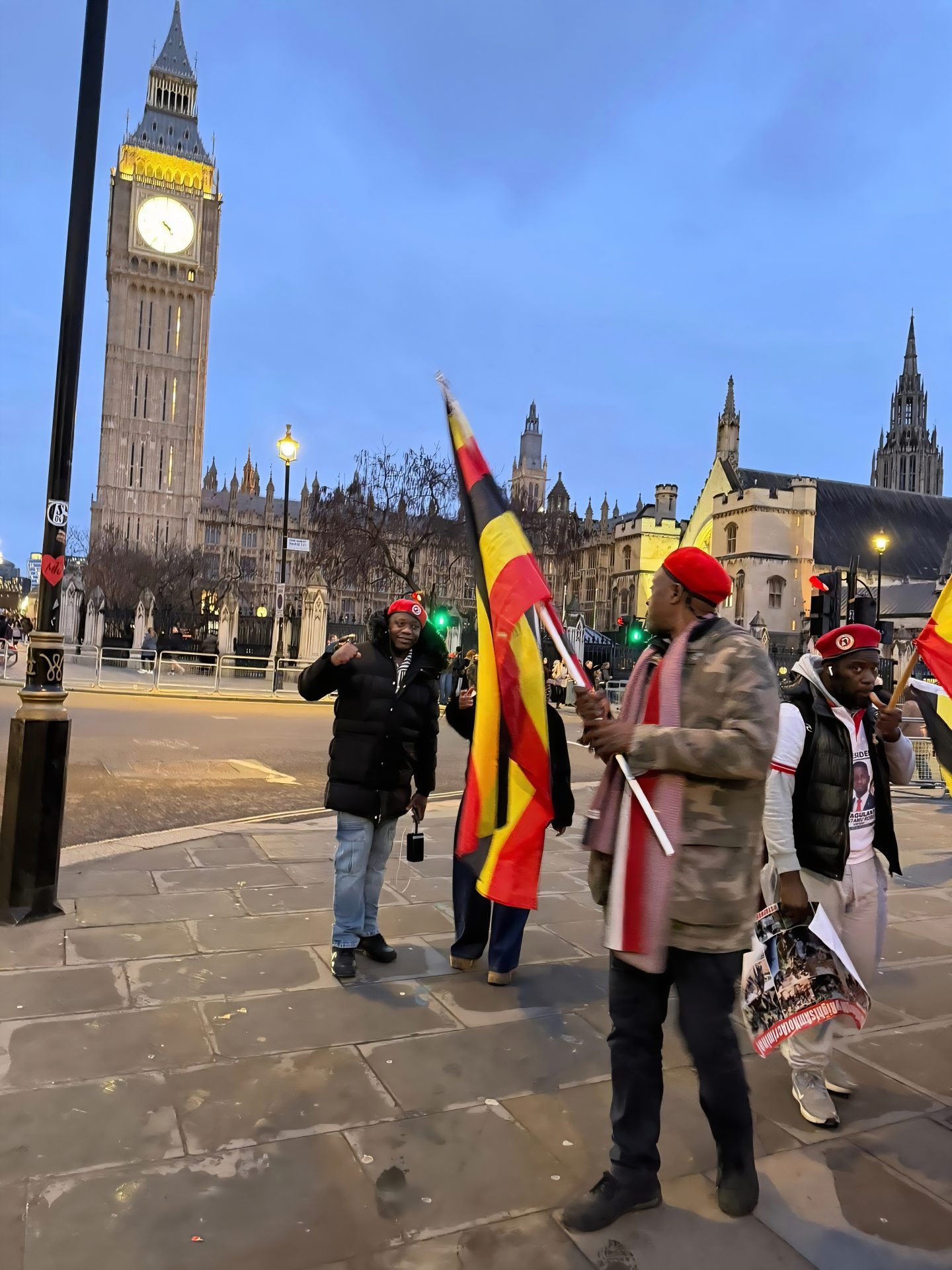 There is an adage that whispers through this cynical framing: Every exile carries a portrait of their homeland, but the frame is always cut elsewhere. The portrait Patricia holds is of a Uganda free from the dictator’s grip, painted with the bold colours of memory and hope. Yet, the ‘frame’—the legal status, the social context, the very safety from which she speaks—is undeniably shaped by British scissors. The critic seizes on this frame, pretending it is the entire picture, shouting that the portrait itself is a forgery, a prop for the framer’s benefit.
The Fractured Mirror: Reflections on a Nation Arguing With Itself
Patricia Ssewungu’s Facebook thread is more than a mere comment section; it is a cracked mirror held up to the nation, each fragment reflecting a different, distorted, yet unmistakable piece of Uganda’s political reality. In its sprawling, chaotic totality, we see not just an argument, but an ecosystem—a digital Savannah where all the creatures of the national discourse come to feed, fight, and vocalise their survival strategies under the long shadow of the dictator. It is passionate, deeply personal, and poisoned by a distrust so profound it has become a first language. Above all, it is fractured by geography, a tangible map of the rift between those who breathe Uganda’s air and those who curate its image from afar.
The core of the contention, the term around which every insult and plea orbits, is the word “ground.” In this lexicon, “ground” is the ultimate contested territory. For the critic at home, it is the literal earth of Uganda—the dusty polling station, the potholed street, the cramped courtroom where fates are decided. It is soil stained with sweat and, at times, blood. For the activist abroad, “ground” has morphed into the digital ether—the networked space where testimony is archived, solidarity is broadcast, and a narrative war is waged for the world’s attention. This is not a trivial semantic debate; it is a struggle to define the very location of the battlefield. Can a revolution be hosted on a server? Can you till virtual soil and harvest real freedom?
The exchange lays bare the brutal scepticism that greets the diaspora voice. Accusations of performing for visas, of enjoying “luxury ground,” of shouting from a safe distance, are all weapons designed to strip away moral authority. They frame exile not because of oppression, but as a disqualification from speaking against it. Yet, to dismiss this online fervour as mere performance is to ignore its palpable power. For an opposition scattered by persecution, economic exile, and fear, social media is the indispensable, fragile scaffold upon which a sense of collective identity and purpose is maintained. It is the nightly town-hall meeting for a nation that cannot assemble, a forum where the regime’s monolithic story is challenged by a chaotic chorus of counter-narratives.
The tools of this digital resistance are telling: the language of existential war, the weaponised meme, the gallows humour. They reveal a populace that has mastered the art of speaking truth to power in the only dialect left largely unpoliced—the dialect of viral ridicule and coded dissent. But herein lies the tragic disconnect that the thread so perfectly captures. There is a world of difference between tweeting “#M7MustGo” and organising the complex, dangerous, grassroots machinery that could actually make it happen. The urgency of exile rhetoric, fuelled by the clear-eyed view from a distance, clashes violently with the grinding, perilous reality of on-the-ground mobilisation, where every step is monitored, every meeting infiltrated, and the cost of failure is not a lost follower, but a lost life or livelihood.
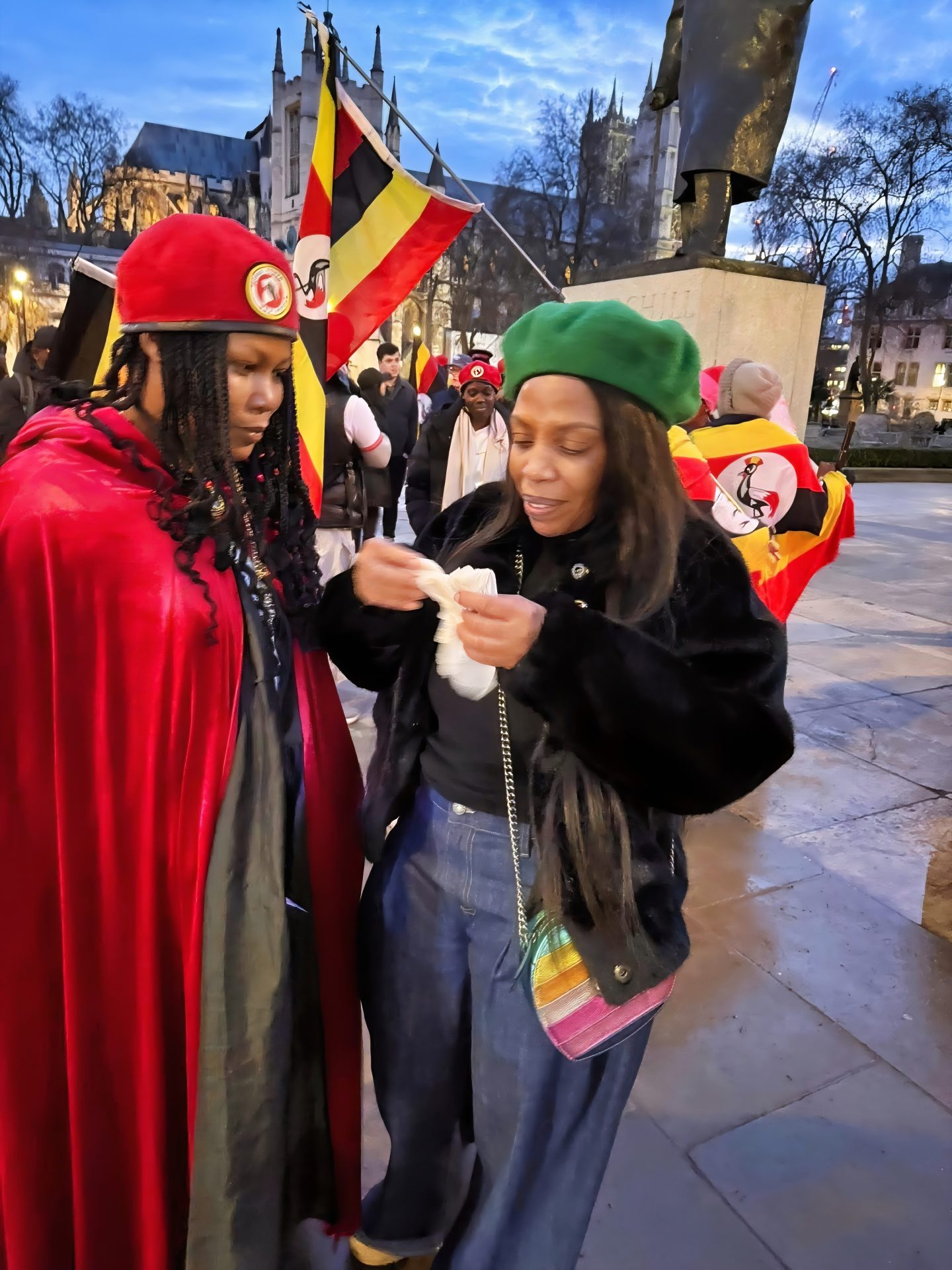 There is an adage that haunts this endeavour: The more things change, the more they stay the same. The regime understands this adage as a manual. It has perfected the art of allowing everything to change—the technology of dissent, the names of opponents, the headlines in foreign papers—while ensuring the fundamental architecture of power remains immovably the same. The digital drama, for all its sound and fury, often signals change without transformation.
Ultimately, Patricia Ssewungu’s thread is a snapshot of a nation trapped in a tragic, compelling stalemate. It showcases the brilliant, defiant energy of a people unwilling to be silenced, yet it exposes the frightening ease with which that energy can be siphoned into digital arguments that rage like wildfire online but fail to spark the crucial, coordinated blaze on the ground. The liberation she speaks of with such conviction depends on bridging that very chasm—on finding a way to turn the shared signal into a shared strategy, to transform the viral hashtag into an unbreakable chain of hands. This task, of uniting the geography of the soil with the power of the signal, remains Uganda’s most pressing, and most elusive, political puzzle. The argument, it seems, is just the easy part.